
Cueva de las Manos · a wall of hands Cueva de las Manos · une paroi de mains
Photograph Photographie Mariano · public domain domaine public
01
Behaviour Comportement
Before writing · prehistory to c. 3000 BCE Avant l’écriture · préhistoire à v. 3000 av. J.-C.
Before law was written, rules lived in behaviour. Avant d’être écrit, le droit vivait dans les comportements.
Rules were carried by memory, habit, shame, fear, ritual and repetition. People knew what was expected long before it was put in words. Les règles étaient portées par la mémoire, l’habitude, la honte, la peur, le rituel et la répétition. Chacun savait ce qu’on attendait de lui bien avant que ce soit mis en mots.

Babylon · around 1750 BCE Babylone · vers 1750 av. J.-C.
Photograph Photographie Rama · CC BY-SA 3.0 FR
02
Stone Pierre
Babylon · c. 1750 BCE Babylone · v. 1750 av. J.-C.
Writing made rules visible. L’écriture a rendu les règles visibles.
Once engraved, a rule could be seen by all. It outlasted memory, passed to the next generations and could be used outside the group. Une fois gravée, la règle pouvait être vue de tous. Elle durait plus que la mémoire, passait aux générations suivantes et pouvait servir au-delà du groupe.
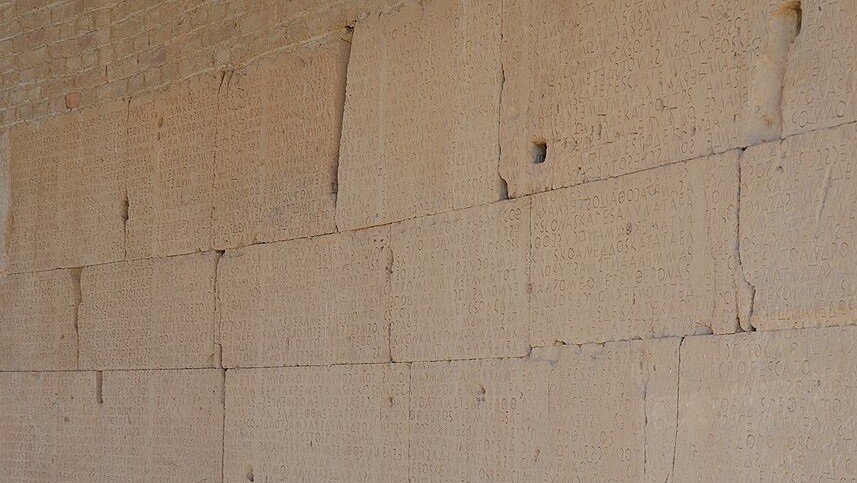
Gortyn · the law is the wall Gortyne · la loi est le mur
Photograph Photographie Carole Raddato · CC BY-SA 2.0
03
City Cité
Gortyn · 5th century BCE Gortyne · Ve siècle av. J.-C.
Public law made rules common. La loi publique a rendu les règles communes.
In Greek cities, law could be displayed, debated and connected to civic life. The rule was no longer only custom; it became a visible reference for the community. Dans les cités grecques, la loi pouvait être affichée, débattue et liée à la vie civique. La règle n’était plus seulement une coutume; elle devenait une référence visible pour la communauté.
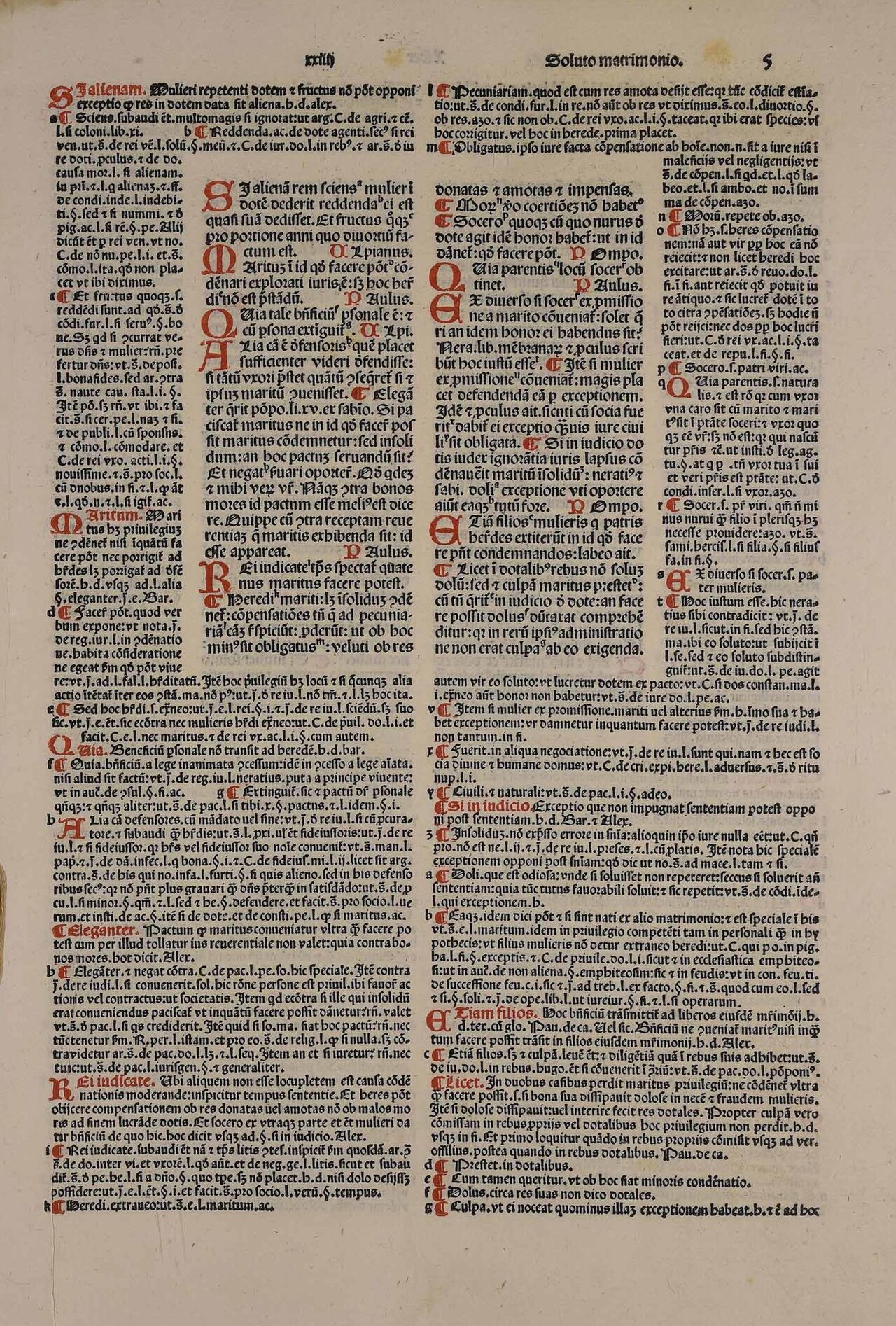
Rome · the text, ringed by commentary Rome · le texte, entouré du commentaire
Scan Numérisation Battista Torri · CC0
04
System Système
Rome · c. 450 BCE to 530s CE Rome · v. 450 av. J.-C. aux années 530 apr. J.-C.
Roman law organized rules into a system. Le droit romain a organisé les règles en système.
Roman jurists sorted rules into lasting categories. Scattered rules gained an order that could be taught, interpreted and extended. Les juristes romains ont classé les règles en catégories durables. Les règles dispersées ont acquis un ordre qui pouvait être enseigné, interprété et prolongé.
- Persons
- Things
- Obligations
- Actions
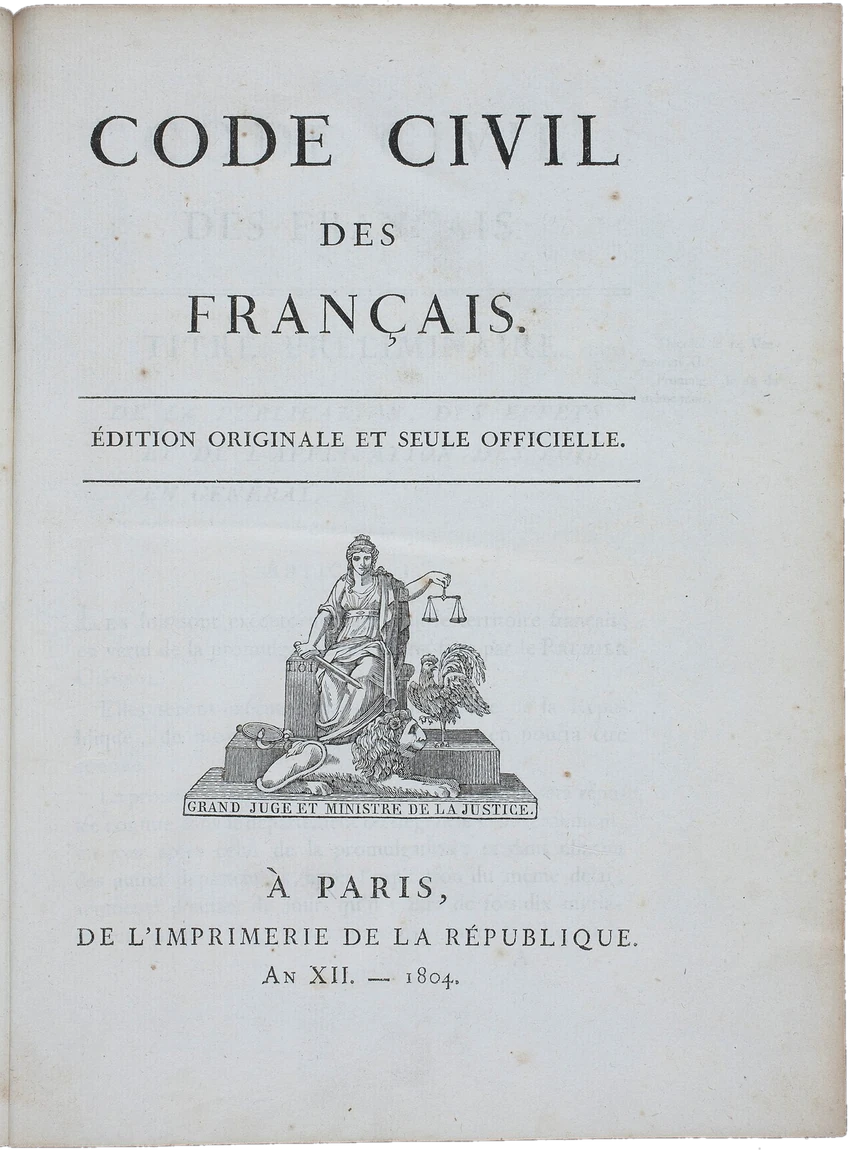
Paris · 1804 · the original edition Paris · 1804 · l’édition originale
Photograph Photographie Imprimerie de la République · CC BY 2.0
05
Code
France · 1804 France · 1804
Codification showed the power of general rules. La codification a montré la force des règles générales.
A good article does not list every possible case. It states one clear rule that fits many cases. The Civil Code is a famous example. Un bon article n’énumère pas tous les cas possibles. Il donne une règle claire qui vaut pour de nombreux cas. Le Code civil en est un exemple célèbre.
Read Article 1240 on Légifrance Lire l’article 1240 sur Légifrance« Tout fait quelconque de l’homme, qui cause à autrui un dommage, oblige celui par la faute duquel il est arrivé à le réparer. »
Civil Code, former Article 1382, now Article 1240 Code civil, ancien article 1382, aujourd’hui article 1240
The clarity crisis La crise de la clarté
The rule remained.
Its structure grew harder to see.
La règle est restée.
Sa structure est devenue moins visible.
In many fields, texts multiplied, exceptions piled up and it became unclear who was responsible. More words did not always produce more certainty. Dans de nombreux domaines, les textes se sont multipliés, les exceptions se sont accumulées et l’on ne savait plus qui était responsable. Davantage de mots n’ont pas toujours produit davantage de certitude.

More words, more shelves Plus de mots, plus de rayonnages
Photograph Photographie Library of Congress · public domain domaine public
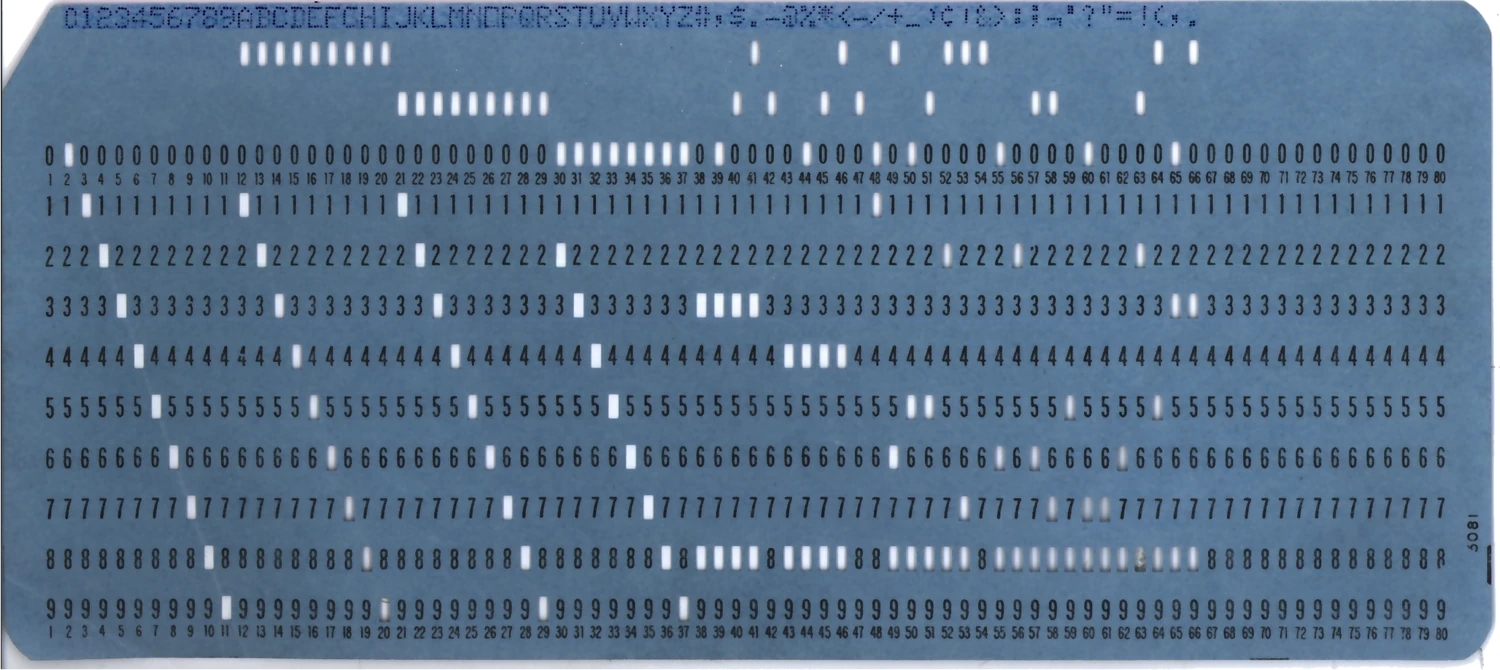
A punched card · a hole, or no hole Une carte perforée · un trou, ou pas de trou
Card by Carte de Gwern · public domain domaine public
06
Machine
Digital law and AI · 2000s to today Droit numérique et IA · des années 2000 à aujourd’hui
AI may help law become logical again. L’IA pourrait aider le droit à redevenir logique.
Rules are moving into online forms, platforms and automated checks. This can make law easier to apply, if each condition and consequence is clear, visible and contestable. Les règles entrent dans les formulaires en ligne, les plateformes et les contrôles automatisés. Cela peut faciliter leur application, si chaque condition et conséquence est claire, visible et contestable.