Kinship · reciprocity · the kill divided Parenté · réciprocité · la prise partagée Patrick Gruban · CC BY-SA 2.0
01
Sharing Partage
Before property · prehistory Avant la propriété · préhistoire
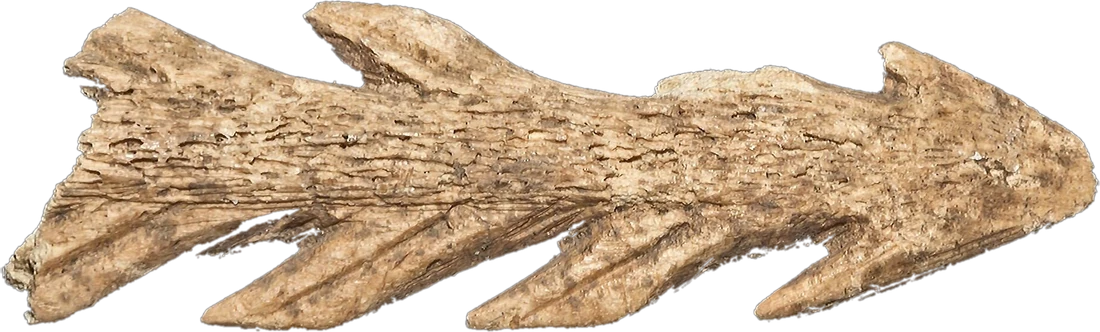
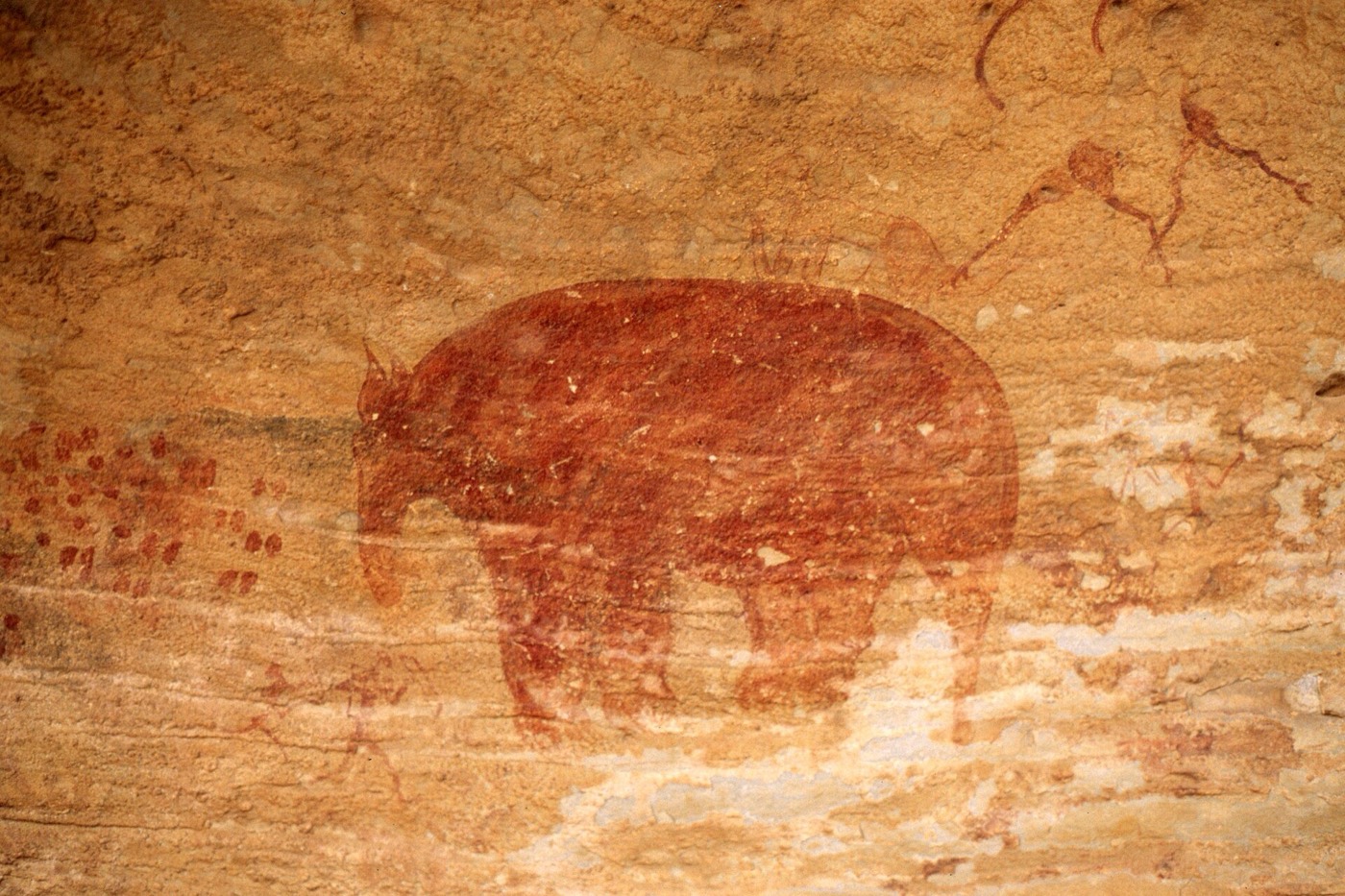
The first guarantee was probably a share of what the group caught. La première garantie fut sans doute une part de ce que le groupe prenait.
Food was shared among relatives and out of duty; nobody paid for it. A hunter who came back empty ate anyway, because the one who ate today would be the one who came back empty tomorrow. Everyone could eat from what the group had. La nourriture se partageait entre parents et par devoir ; personne ne la payait. Un chasseur rentré les mains vides mangeait quand même, car celui qui mangeait aujourd’hui serait celui qui rentrerait bredouille demain. Chacun pouvait manger de ce que le groupe avait.
Egypt · around 2000 BCE Égypte · vers 2000 av. J.-C. The Metropolitan Museum of Art · CC0
02
Granary Grenier
The first cities · from c. 3000 BCE Les premières cités · à partir de v. 3000 av. J.-C.
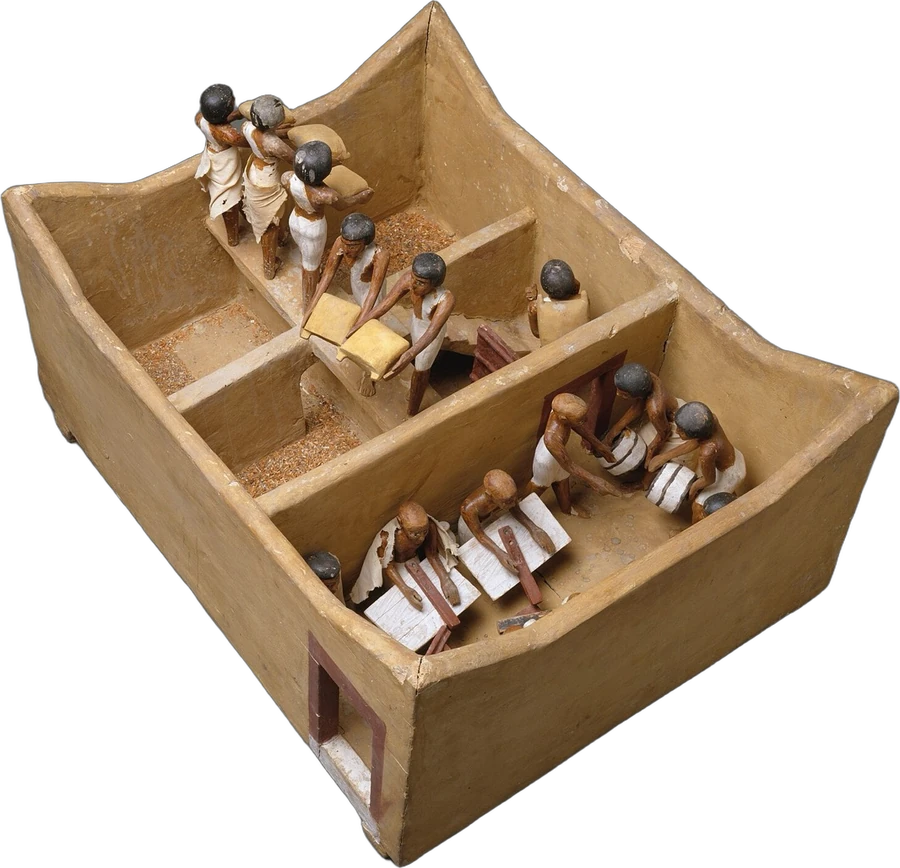
Once there was a store, someone had to answer for hunger. Dès qu’il y eut une réserve, quelqu’un dut répondre de la faim.
Settlement brought property, and property brought a gap between those who had grain and those who did not. Temples and rulers held the stores, counted them, and opened them in bad years. Debts were cancelled, sometimes by proclamation. Early welfare was food, and its records are among the first accounts. La sédentarité a fait naître la propriété, et la propriété un écart entre ceux qui avaient du grain et ceux qui n’en avaient pas. Temples et souverains détenaient les réserves, les comptaient, et les ouvraient les mauvaises années. Les dettes étaient annulées, parfois par proclamation. L’assistance ancienne était de la nourriture, et ses registres sont parmi les premiers comptes.
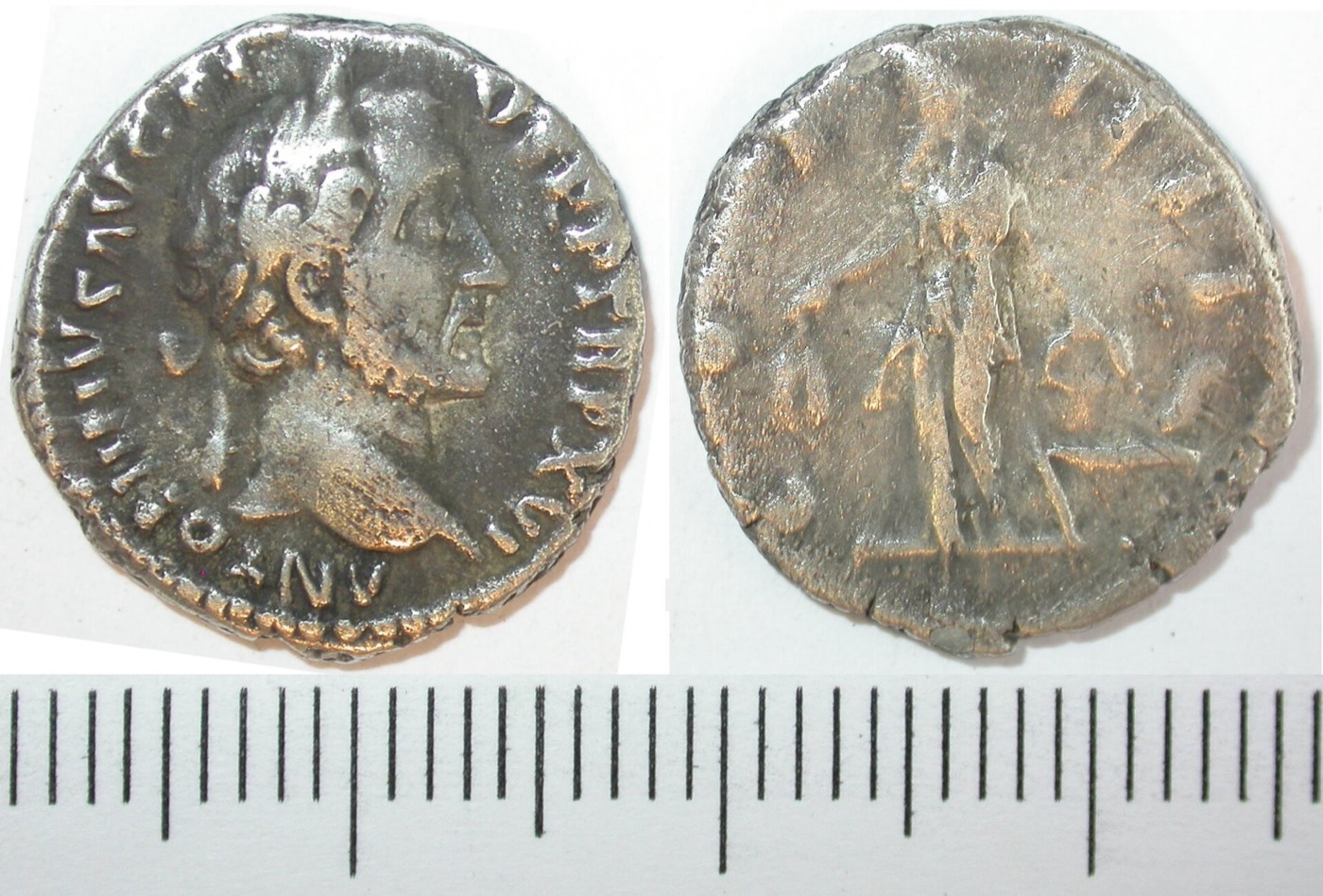
Rome · the grain put on a coin Rome · le blé mis sur une pièce Derby Museums Trust · CC BY-SA 2.0
03
Grain Blé
Rome · from 123 BCE Rome · à partir de 123 av. J.-C.
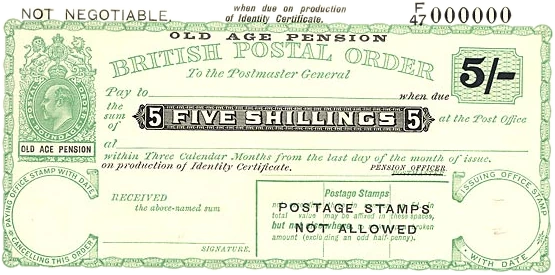
Rome wrote down who was entitled. Rome a mis par écrit qui avait droit.
The city sold grain below the market price, and later gave it away. What made it new was less the generosity than the register: a list of names, and a rule saying who could be on it. The share was attached to citizenship, to residence in the city, and to being a man. La ville vendit le blé sous le prix du marché, puis le distribua gratuitement. La nouveauté tenait moins à la générosité qu’au registre : une liste de noms, et une règle disant qui pouvait y figurer. La part tenait à la citoyenneté, à la résidence dans la ville, et au fait d’être un homme.
The Roman grain laws at LacusCurtius Les lois frumentaires romaines sur LacusCurtius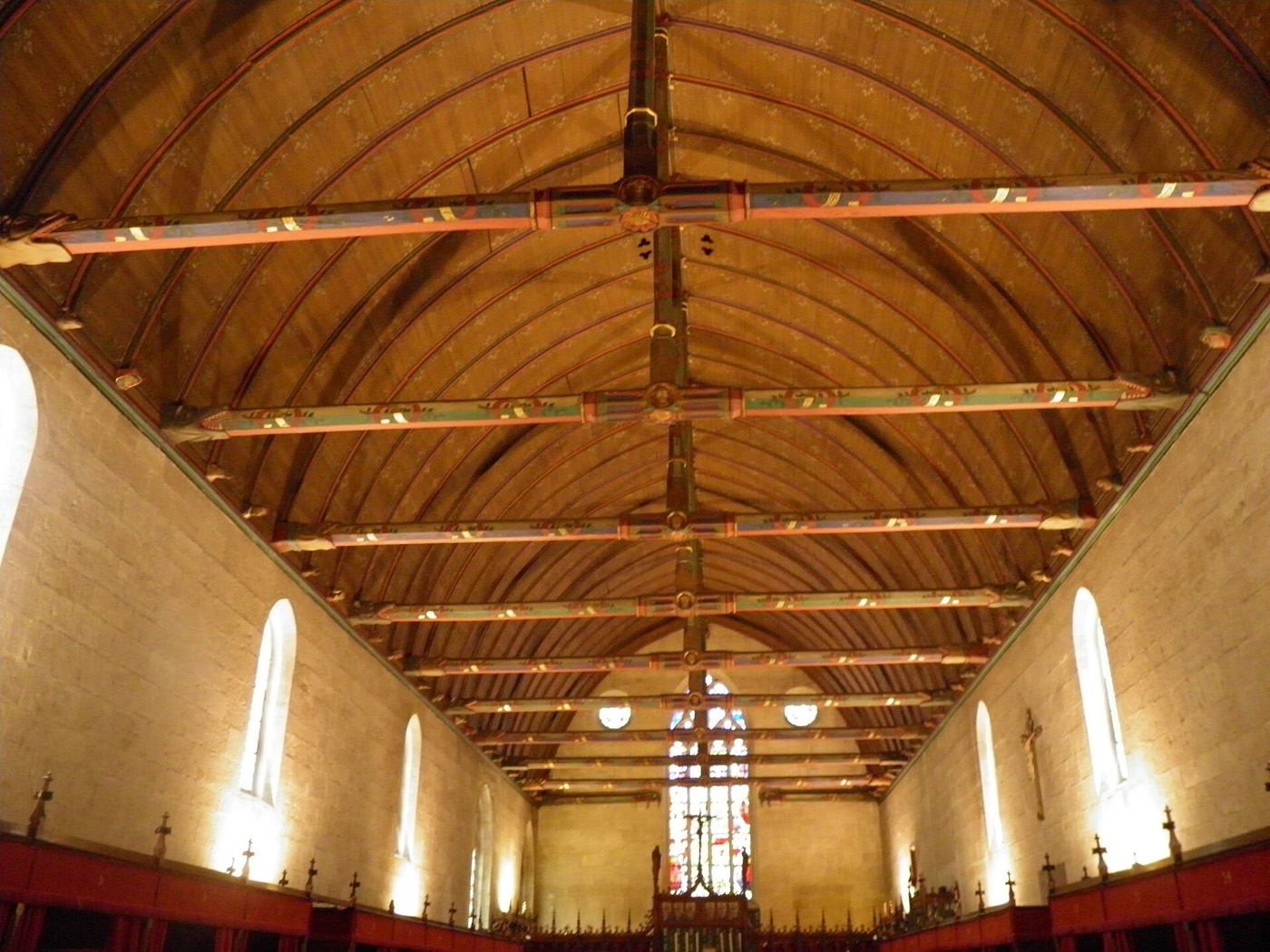
Beaune · hall of the poor, founded 1443 Beaune · salle des pôvres, fondée en 1443 Gzen92 · CC BY-SA 4.0
04
Alms Aumône
Religious societies · the long middle Sociétés religieuses · le long milieu
Helping the poor became a religious duty. Aider les pauvres devint un devoir religieux.
Giving moved from the ruler to the believer. In Islam the share is fixed and owed each year, about a fortieth of what one holds, and it is a pillar of the faith rather than a favour. In Christendom monasteries and hospitals fed and housed the poor, and endowments kept doing it after their founders died. Nobody administered it centrally, and that was its strength and its weakness. Le don passa du souverain au croyant. En islam la part est fixe et due chaque année, environ un quarantième de ce que l’on possède, et c’est un pilier de la foi plutôt qu’une faveur. En chrétienté, monastères et hôpitaux nourrissaient et logeaient les pauvres, et les fondations continuaient après la mort de leurs fondateurs. Personne ne l’administrait d’en haut : ce fut sa force et sa faiblesse.
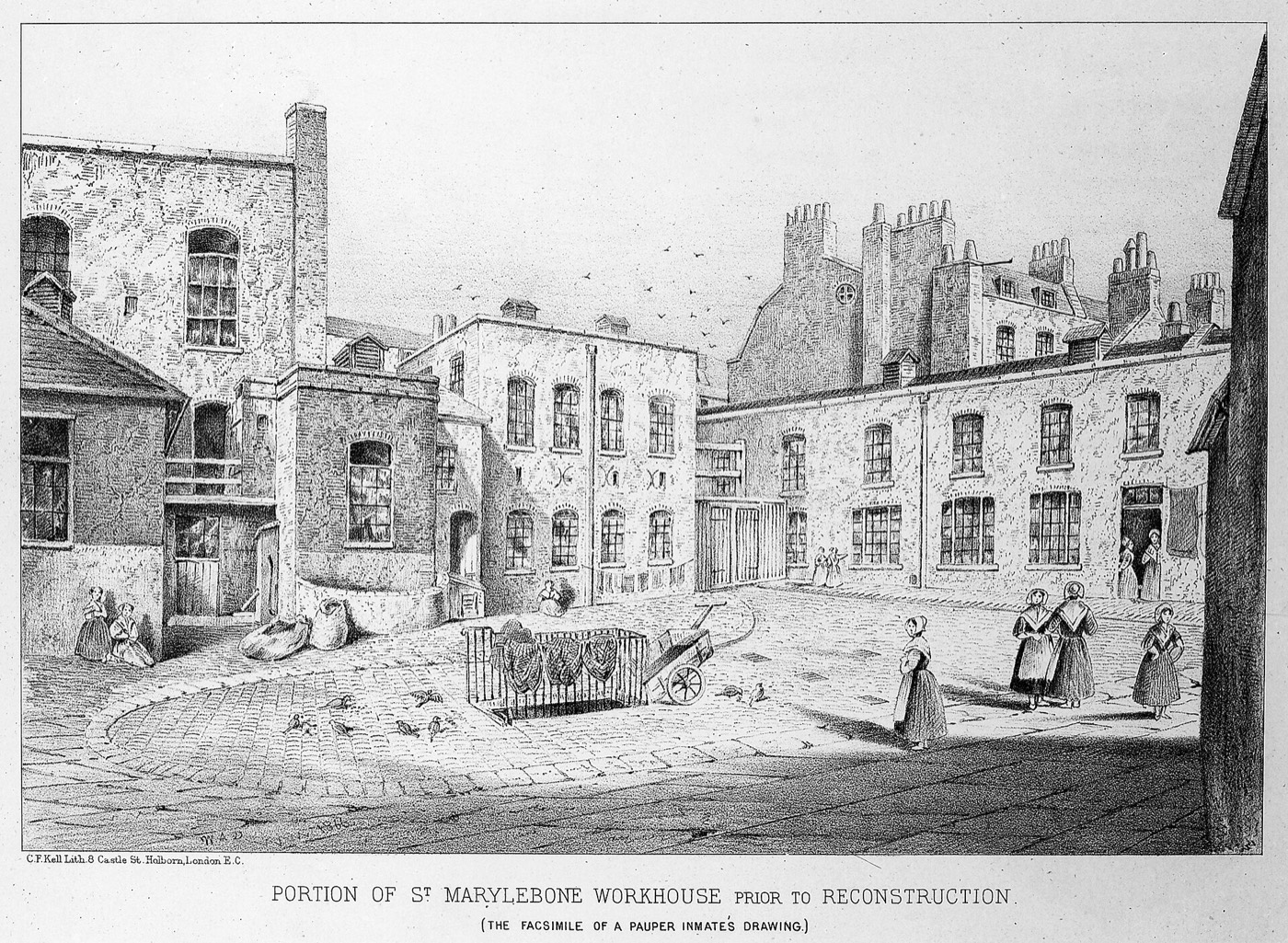
England · relief with a building attached Angleterre · le secours avec un bâtiment Wellcome Collection · CC BY 4.0
05
Relief Secours
England · 1601 to 1834 Angleterre · de 1601 à 1834
Relief became administration, and administration sorted people. Le secours devint administration, et l’administration se mit à trier.
England made poverty a public charge on the parish, paid by a rate levied on neighbours. With money came categories: those thought unable to work, and those thought unwilling. In 1795 the magistrates of Speenhamland went further and tied the payment to the price of bread and the size of the family, which made the guarantee a number that moved. By 1834 the answer had hardened into the workhouse, where relief was made deliberately unpleasant so that few would ask. L’Angleterre fit de la pauvreté une charge publique de la paroisse, payée par une taxe levée sur les voisins. Avec l’argent vinrent les catégories : ceux qu’on jugeait incapables de travailler, et ceux qu’on jugeait peu disposés à le faire. En 1795 les magistrats de Speenhamland allèrent plus loin et lièrent le versement au prix du pain et à la taille de la famille, ce qui fit de la garantie un nombre qui bouge. En 1834 la réponse s’était durcie en workhouse, où le secours était rendu volontairement pénible pour que peu le demandent.
The English Poor Laws, at the Workhouse archive Les lois anglaises sur les pauvres, archives du workhouse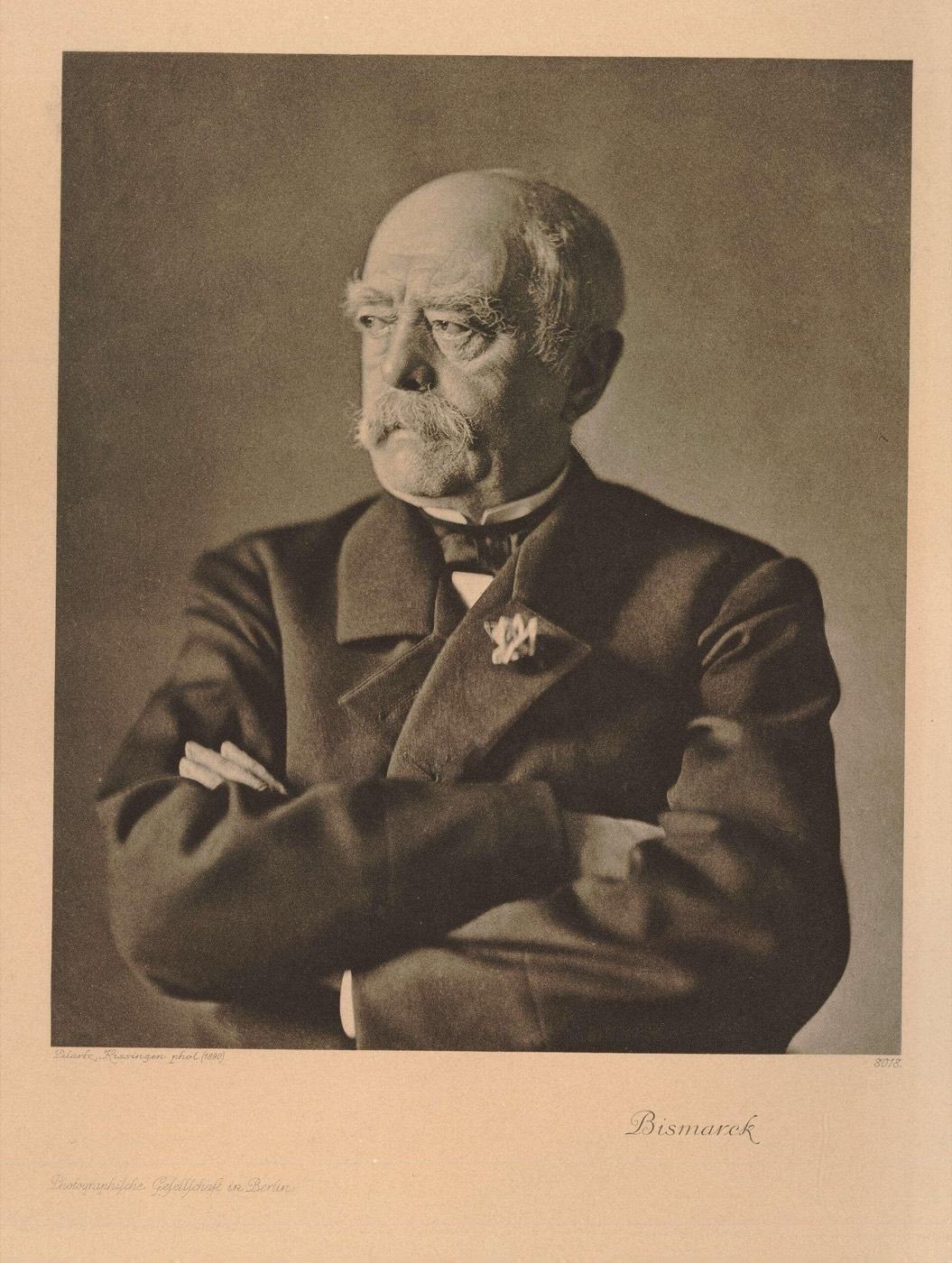
Germany · 1883, 1884, 1889 Allemagne · 1883, 1884, 1889 Jacques Pilartz · Public domain Jacques Pilartz · Domaine public
06
Insurance Assurance
Germany, then Britain · 1883 to 1942 Allemagne, puis Grande-Bretagne · de 1883 à 1942
The guarantee stopped being charity and became a contribution. La garantie cessa d’être une charité pour devenir une cotisation.
Bismarck insured workers against sickness, then accident, then old age, and did it partly to weaken his opponents. The change was profound all the same: what you received was no longer a favour but something you had paid into, and asking for it carried less shame. Beveridge carried the idea to its widest form in 1942, from cradle to grave. The whole system rests on one condition, that a person has a job. Bismarck assura les ouvriers contre la maladie, puis l’accident, puis la vieillesse, en partie pour affaiblir ses adversaires. Le changement n’en fut pas moins profond : ce que l’on recevait n’était plus une faveur mais une chose à laquelle on avait cotisé, et la demander faisait moins honte. Beveridge porta l’idée à son ampleur maximale en 1942, du berceau à la tombe. Tout le système repose sur une condition : avoir un emploi.
The Beveridge Report at the National Archives Le rapport Beveridge aux Archives nationales britanniques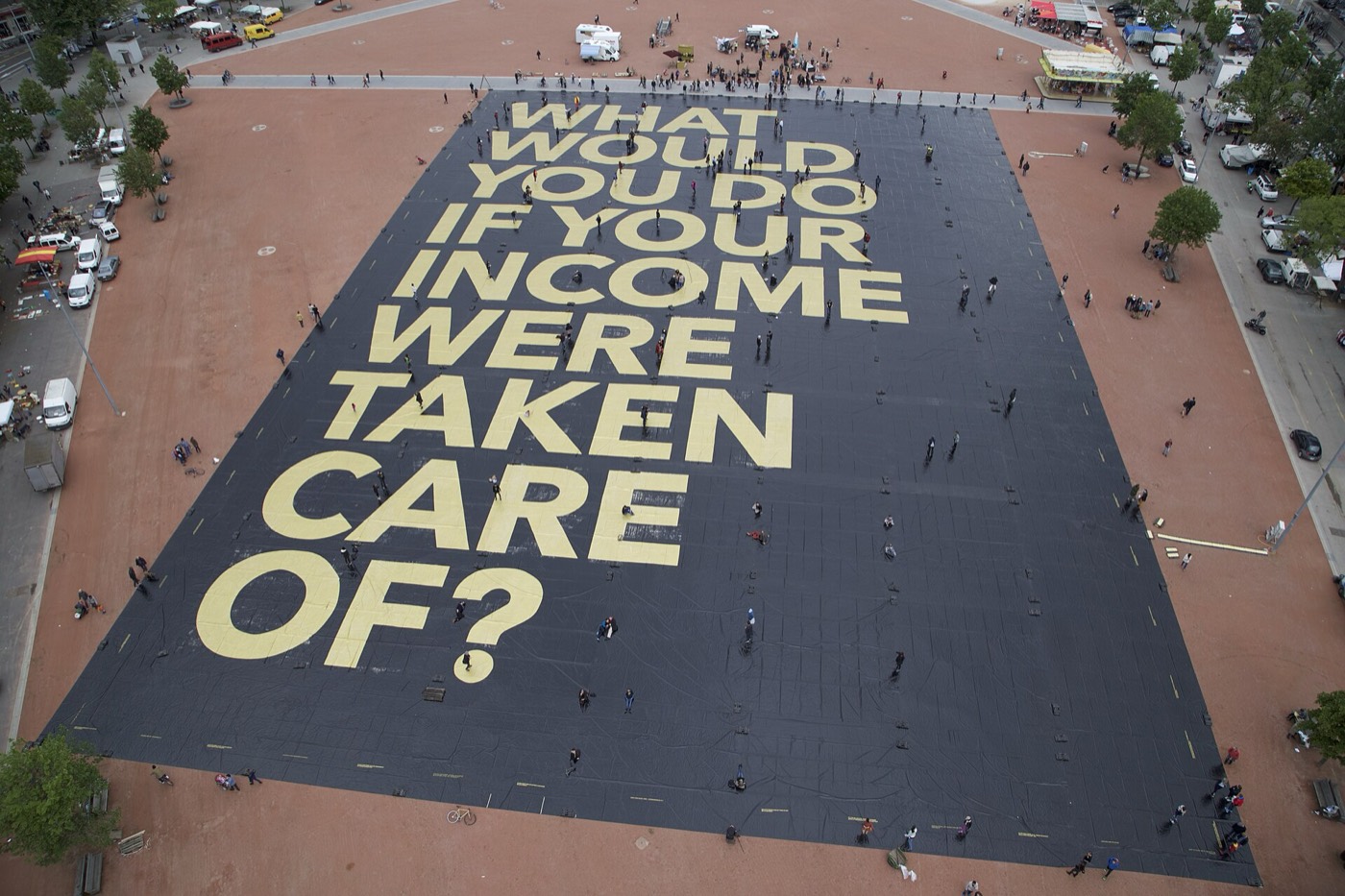
Geneva · the question laid on the ground Genève · la question posée à même le sol Generation Grundeinkommen · CC BY 2.0
07
Income Revenu
From 1797 · still a proposal Depuis 1797 · toujours une proposition
The proposal removes the condition. La proposition retire la condition.
Thomas Paine put it plainly in 1797. For him, the earth was common property before it was improved, so every person is owed a payment at adulthood and again in old age, not as charity but as the rent of what was enclosed. The idea often returns when work changes shape, and is argued about as if it were new. Thomas Paine le dit clairement en 1797. Pour lui, la terre fut un bien commun avant d’être améliorée : chacun est donc créancier d’un versement à sa majorité, puis dans la vieillesse, non par charité mais comme loyer de ce qui a été clôturé. L’idée revient souvent quand le travail change de forme, et l’on en débat comme d’une nouveauté.
No country has adopted it in full. Alaska has paid every resident a yearly dividend from its oil fund since 1982. Finland tried it for two years with unemployed people and found less anxiety and little change in how much they worked. Switzerland voted on it in 2016 and said no, after the largest poster in the world was unrolled in Geneva to ask what people would do if their income were assured. Aucun pays ne l’a adopté entièrement. L’Alaska verse à chaque résident un dividende annuel de son fonds pétrolier depuis 1982. La Finlande l’a essayé deux ans auprès de chômeurs : moins d’anxiété, et peu de changement dans le temps travaillé. La Suisse a voté en 2016 et a dit non, après que la plus grande affiche du monde eut été déroulée à Genève pour demander ce que les gens feraient si leur revenu était assuré.
Read Paine’s Agrarian Justice Lire La Justice agraire de Paine